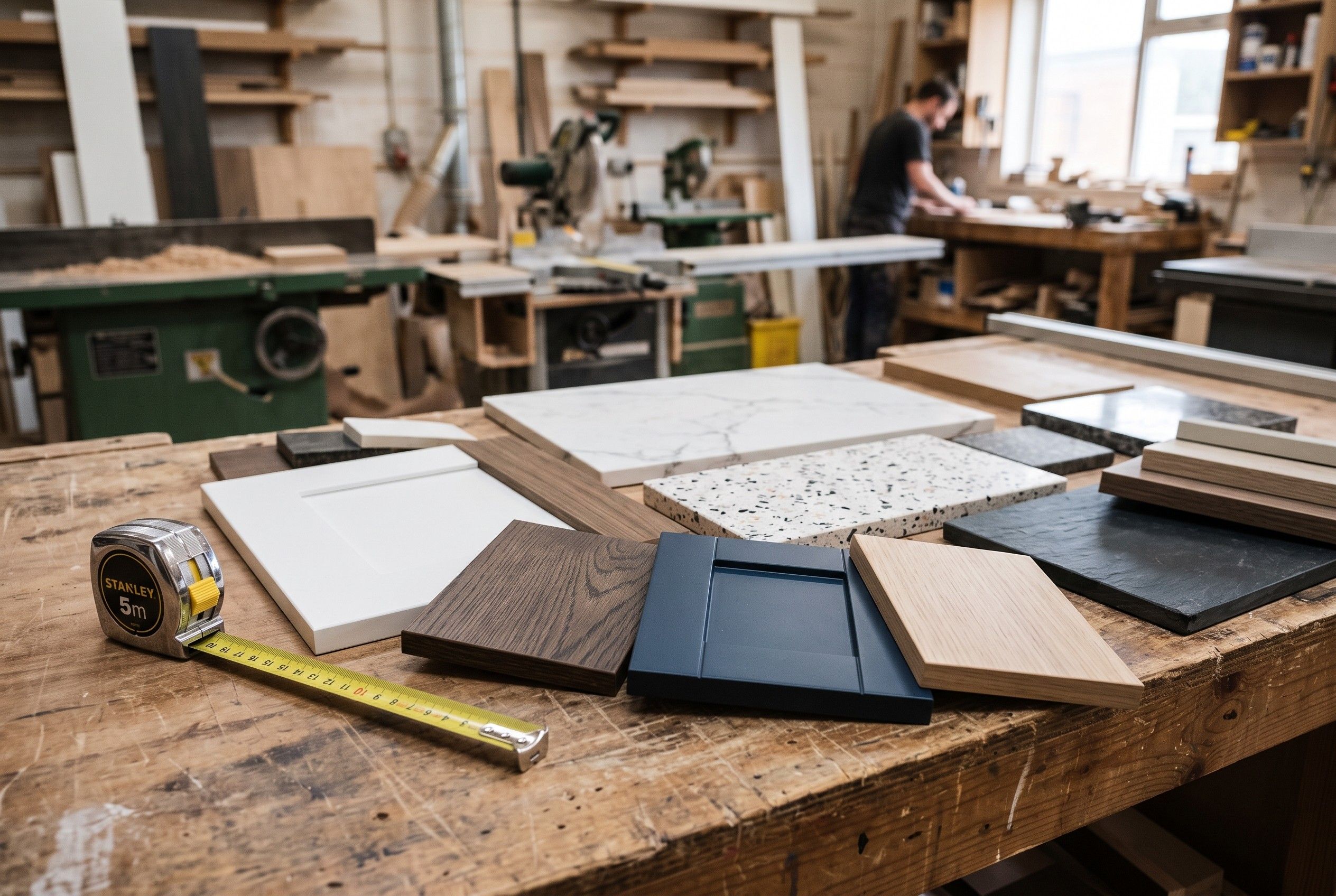
As of 2026, a running metre of made-to-measure kitchen costs roughly PLN 1,000–2,500 in laminate, rising to PLN 4,500 and beyond once the design calls for veneer, sintered stone and lift systems on the wall units. A fitted wardrobe 100–150 cm wide with sliding doors typically runs to PLN 2,800–4,700, and a walk-in wardrobe in its own room starts at around PLN 15,000. Where your project lands within these ranges comes down mainly to the fronts, the worktop, the number of drawers and the hardware class. The length of the run only multiplies the cost of those choices.
Indicative prices in 2026
We have drawn these ranges from the price lists and guides published or updated in 2026 by several Polish workshops and home-renovation portals. They cover the furniture alone, without appliances. Some price lists include the site survey, delivery and installation; others list these separately.
| Furniture type | Indicative price, as of 2026 |
|---|---|
| Kitchen, basic specification: laminate board, laminate worktop | approx. PLN 1,000–2,500 per running metre |
| Kitchen, mid specification: lacquered fronts, engineered quartz worktop | approx. PLN 2,000–4,500 per running metre |
| Kitchen, higher specification: veneer, sintered stone or natural stone, lift systems, lighting | from approx. PLN 4,500 per running metre, up to PLN 7,000–8,000 at the top end |
| Fitted wardrobe 100–150 cm with sliding doors | approx. PLN 2,800–4,700 |
| Made-to-measure wardrobe, per running metre | approx. PLN 1,000–6,000, depending on the fronts and interior |
| Walk-in wardrobe built into an existing recess | from approx. PLN 8,000 |
| Walk-in wardrobe as a separate room | from approx. PLN 15,000, from approx. PLN 25,000 with lighting and an island unit |
| TV unit or living-room built-in | approx. PLN 2,000–4,000 simple, PLN 4,000–8,000 mid-range, up to PLN 25,000 for an elaborate scheme |
A 5-metre kitchen therefore costs from around PLN 5,000–12,500 at the basic end to over PLN 40,000 at the higher end, in both cases without appliances. One workshop quotes an average of PLN 32,000 across its own projects for 5 running metres. Treat that as one data point, not a norm.
A running metre is a simplification. One price list bundles it with wall and base units and a worktop; another counts just carcasses with fronts. A metre with a corner pull-out mechanism costs more than a metre under a window with two shelves, so compare the specification, not the headline rate, when you weigh up quotes. The usual scope of a kitchen project is set out on the kitchens page.
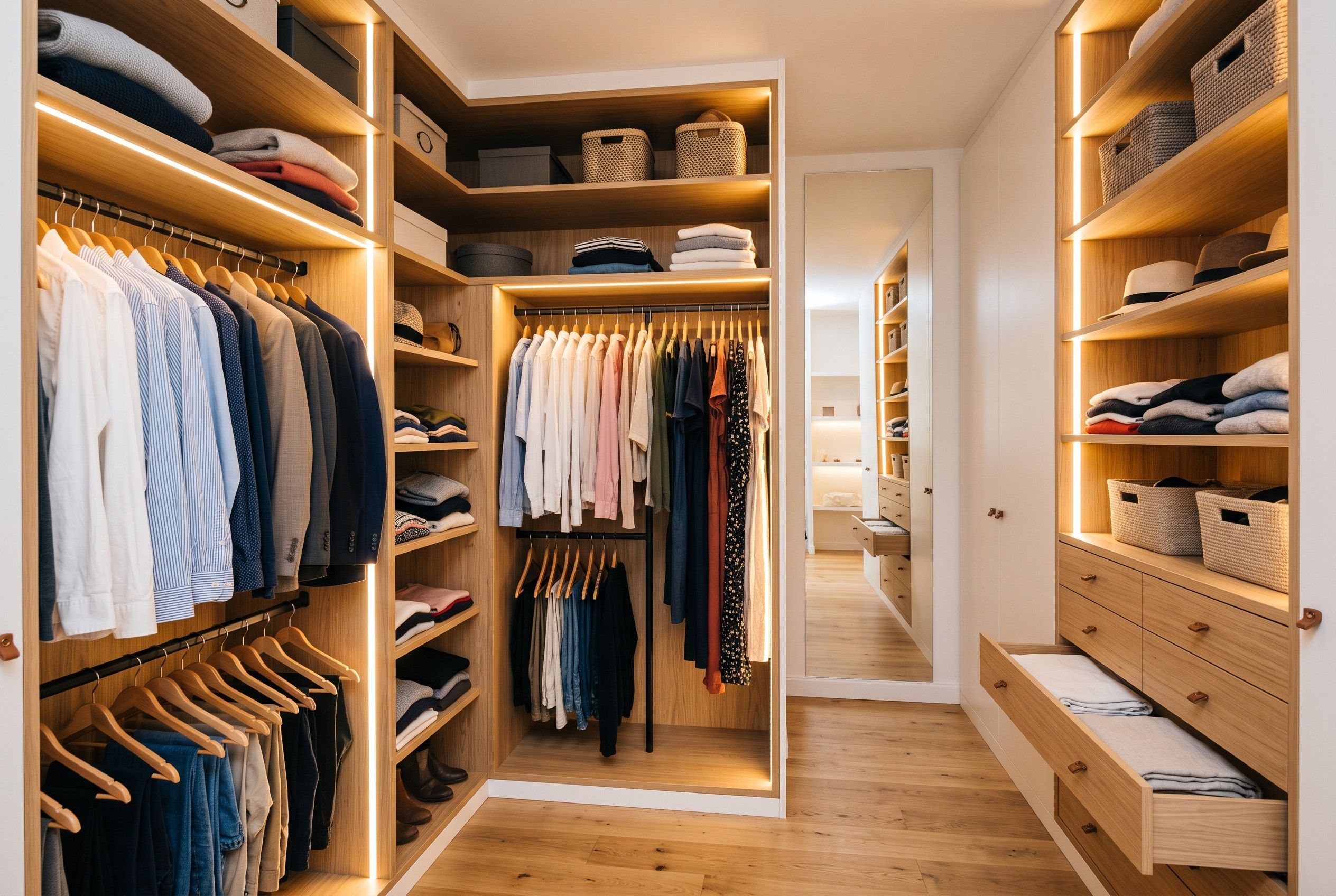
In wardrobes and walk-in wardrobes, the doors and the interior fittings move the price most. A fitted wardrobe that uses the room's own walls costs less than a free-standing unit with a full carcass. Glass, acrylic or veneer doors cost more than laminate, and drawers and accessories add a further 10–15%. The scope of this kind of joinery is set out on the wardrobes and dressing rooms page.
Five things that move the price
In one workshop's published cost breakdown, carcasses and fronts together account for 55–70% of a kitchen's price, hardware and worktop around 10–15% each, and the rest covers the design, survey, delivery and installation. Other workshops' proportions may differ, but the list of line items stays the same.
Fronts and their finish
Fronts are the most visible element and the one that stretches the price range the furthest. In 2026 price lists, a simple matt lacquered MDF front starts at around PLN 270 per m². A veneer front costs around PLN 450 to PLN 1,800 per m², depending on the wood species, the base board and the finish. In 2025 listings, laminate board started at around PLN 150 per m². We cover how these materials differ in daily use in our comparison of lacquer, veneer, laminate and Fenix fronts.
Worktop
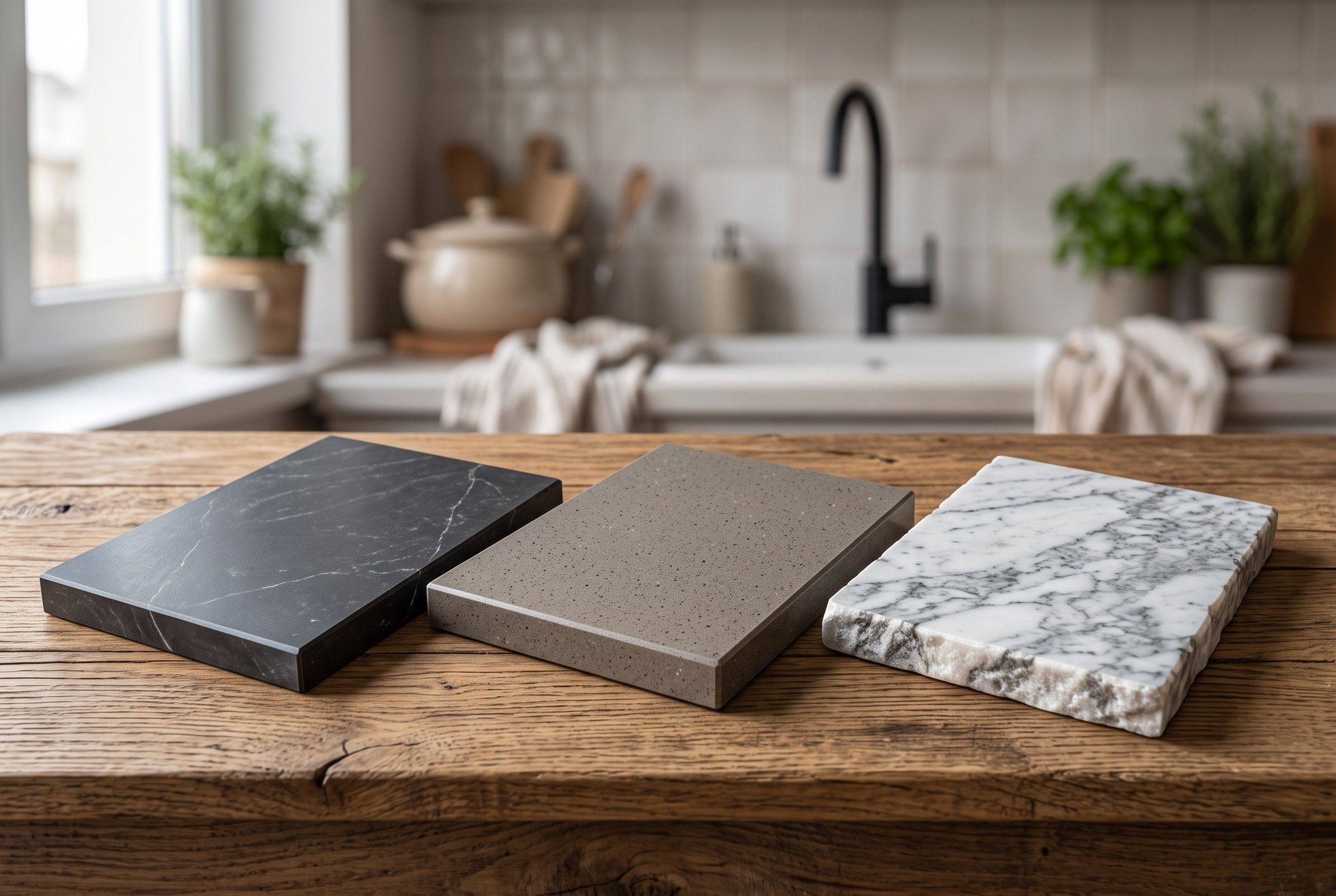
A laminate worktop costs roughly PLN 100–300 per running metre. Engineered quartz usually costs PLN 800–2,500 per m², and sintered stone around PLN 1,000–3,500 per m². On top of the slab come the cut-outs for the sink and hob, edge finishing and fitting. A worktop 4 m long and 60 cm deep works out at around 2.4 m² of material, so the engineered quartz alone costs roughly PLN 1,900–6,000, and laminate PLN 400–1,200. We set out what that difference buys you in the article on sintered stone, engineered quartz and natural stone worktops.
Drawers and hardware
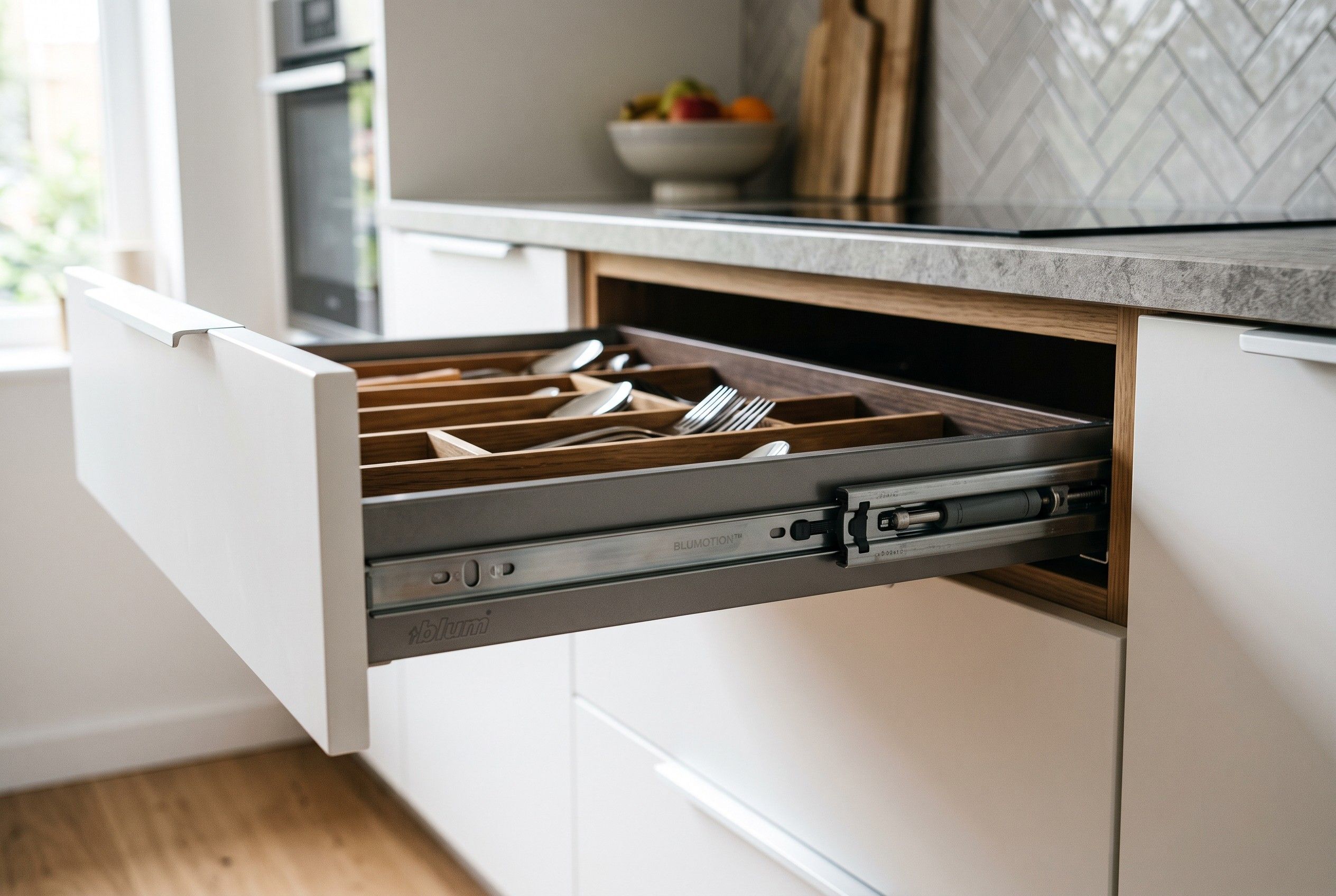
A cabinet with three drawers needs three pairs of runners and three sets of drawer sides, so it costs more than the same cabinet with a shelf behind a door. On top of that comes the hardware class: full extension, soft-close, lift systems for wall units, push-to-open fronts. In the cost breakdown mentioned above, hardware runs to PLN 200–700 per running metre of kitchen. We explain where cutting corners on the mechanism costs you later, and where a cheaper option is fine, in the article on hardware brands.
Room shape and scope of the joinery
Angled walls, recesses, units built to the ceiling, filler panels against uneven walls and elements fitted tight to a window all mean more cutting and longer installation. In a living room, the same applies to slatted panels, lit shelving, a fireplace surround and wiring run to the lighting. Each of these extras is its own line in the quote, even when it looks like a minor detail on the visualisation.
Site survey, design, delivery and installation
A site survey typically costs PLN 200–400, a design from a few hundred zloty upward, and some workshops deduct both amounts from the price once you sign the contract. Delivery and installation, in one itemised price list, come to 8–12% of the kitchen's value, or PLN 2,000–5,000. The figure rises with distance, carrying units up stairs with no lift, and a stone worktop, which a separate team usually installs.
If you already have a floor plan and a list of the appliances to house, send them through the quote form. We’ll work out a price for your actual materials.
Comparing quotes: a checklist
Two quotes for the same project can differ by several thousand zloty and both can still be fair. Before you compare the totals, check whether they describe the same thing:
- gross or net price, and whether it includes the site survey, design, delivery, carrying in and installation;
- the material and thickness of the carcasses, and what the cabinet backs are made of;
- the front material and finish: the lacquer's sheen level, single- or double-sided lacquering, the veneer species;
- the edge banding and how it is glued, especially near the sink and dishwasher;
- the worktop: material, thickness, number of cut-outs, edge profile and installation;
- the hardware: manufacturer, series and load rating of the runners, the type of hinges and lift systems;
- lighting: what the workshop wires in and what is left to an electrician;
- the sink, tap and appliances: whether they are included, or only their housing is quoted;
- the completion date and the payment schedule.
If a quote leaves out any of this, ask for it in writing. The specification is useful for years afterwards too, when you need to replace a hinge or match a front in the same colour.
Savings that do not cost you durability
The simplest saving is using different materials in different places. Put lacquer or veneer on the fronts you actually see, and build the wardrobe interiors, the pantry or a garage unit from laminate board. In a kitchen, the carcass colour works the same way: white board inside the cabinets can cost less than a shade matched to the fronts, and it is no different structurally.
The second approach is matching the hardware to the load. Pan drawers and lift systems work every day, so the mechanism's class matters there. A cabinet above the fridge, opened a few times a year, does not need the same specification.
The third is the worktop. A thicker slab means more material, and every extra cut-out and profiled edge is another line in the quote.
Some savings come back as a cost later: plain edge banding near the dishwasher, and runners rated too low for wide, heavily loaded drawers. Skipping a workshop's own site survey belongs in this group too. When you supply the dimensions yourself, it becomes hard to establish afterwards who is responsible for a front that does not fit.
One last sum. A 4 m kitchen in the mid specification comes to PLN 8,000–18,000 without appliances, going by the table above. The same kitchen with veneer fronts and a sintered stone worktop moves towards PLN 18,000–30,000. That is only a rough order of magnitude, but it lets you set a budget before the first conversation.