It usually takes six to twelve weeks from your first contact with a workshop to finished furniture in your home. That time covers the site survey, the design, the quote and contract, production and fitting, and you can plan each stage in advance. Your choice of material stretches the schedule the most: veneer, sintered stone or a stone worktop take longer to arrive from suppliers than laminate board. For each stage, you’ll find the questions worth asking before you sign anything.
First contact and an initial conversation
The first conversation, by phone or through a form on the website, is about pinning down the scope: which room, how big, roughly what budget and what timeframe. A workshop will rarely give you an exact price at this point, because without a survey and a design it only has your description to go on. You can find out how long you’ll wait for a survey, whether the initial conversation is free, and whether the company fits furniture where you live. If the website doesn’t say where they work, ask.
Bring a few things to this conversation: a rough floor plan, a list of appliances if you’re planning a kitchen, and photos that show the style you want, not just the colour. The more specific the brief, the sooner a workshop can judge whether the project suits its production and whether a survey makes sense. If you’re still gathering ideas, start with what the room needs to do day to day. Then look for photos that match that use.
The site survey
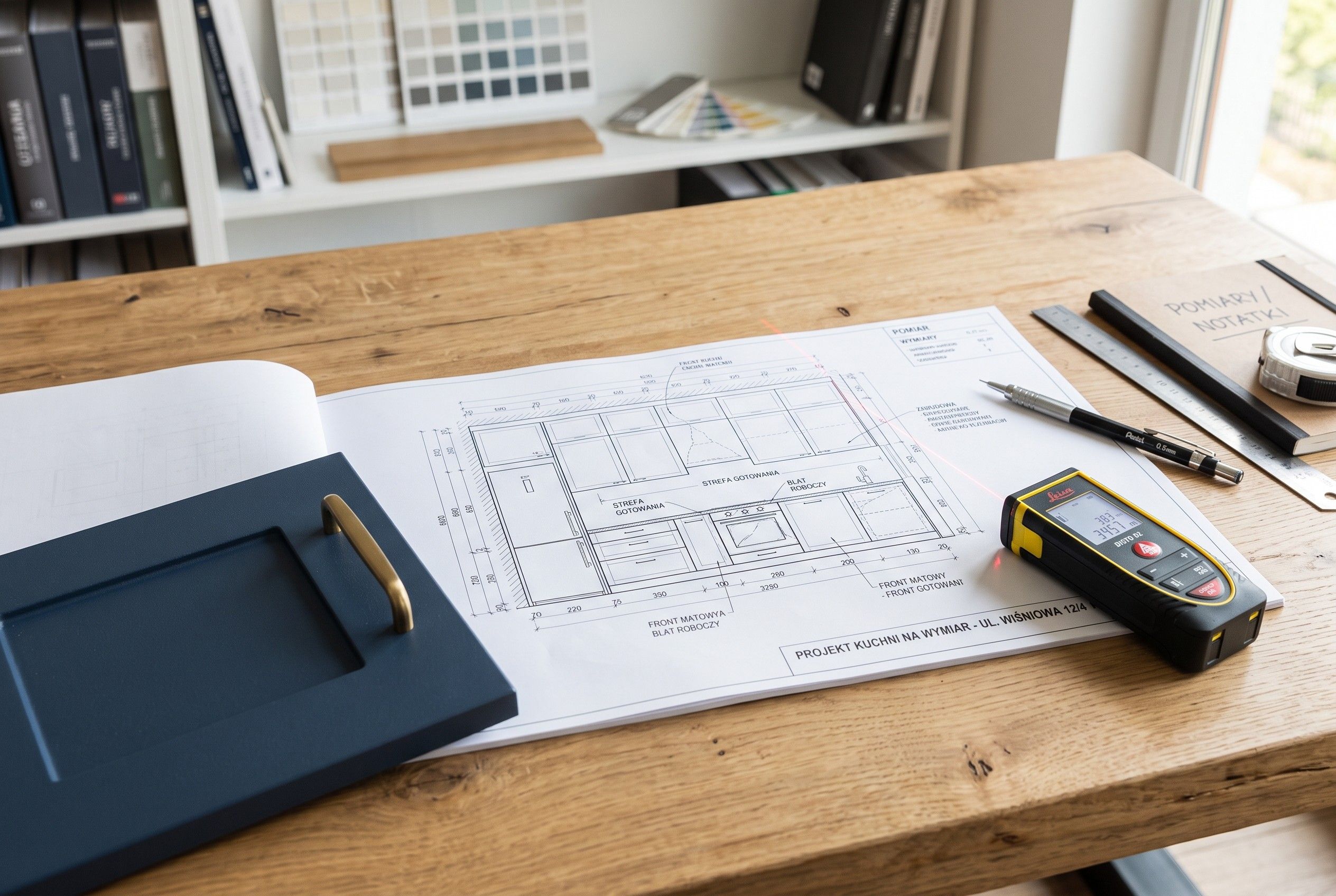
Someone from the workshop carries out the survey, usually at the home or premises the order is for. It takes an hour or two, depending on the size of the room. Surveyors use a laser measure, which is more accurate than a tape. Some firms survey free of charge; others charge around PLN 200–400 and deduct it from the order price once you sign the contract. Check these terms before you book, so there are no surprises when you settle up.
A thorough survey covers more than the width and height of a wall. It also records sloping walls, differences in floor level, the position of sockets and service outlets, and whether the walls are square. A designer deals with small deviations, a few millimetres per metre, using filler panels and adjustable feet. Bigger discrepancies can mean a change of plan, such as a different cabinet layout or an extra filler panel.
Try to be there for the survey. It’s the right moment to agree the worktop height for your build, which way the doors should open, and where sockets should go for particular appliances. Otherwise these points have to be fixed later in the design.
Design, visualisation and material decisions
The survey feeds into a functional design, often with two or three layout options. Next comes a visualisation that shows the materials and colours in lighting close to the real room. A good design also includes dimensioned technical drawings for every element, because the joiner cuts the boards from those, not from the visualisation.
Some workshops charge for the design. Trade guides quote around PLN 100–300 per square metre, credited against the order once you sign the contract. Ask how many rounds of revisions the price includes, as a third change to the cabinet layout is often charged separately.
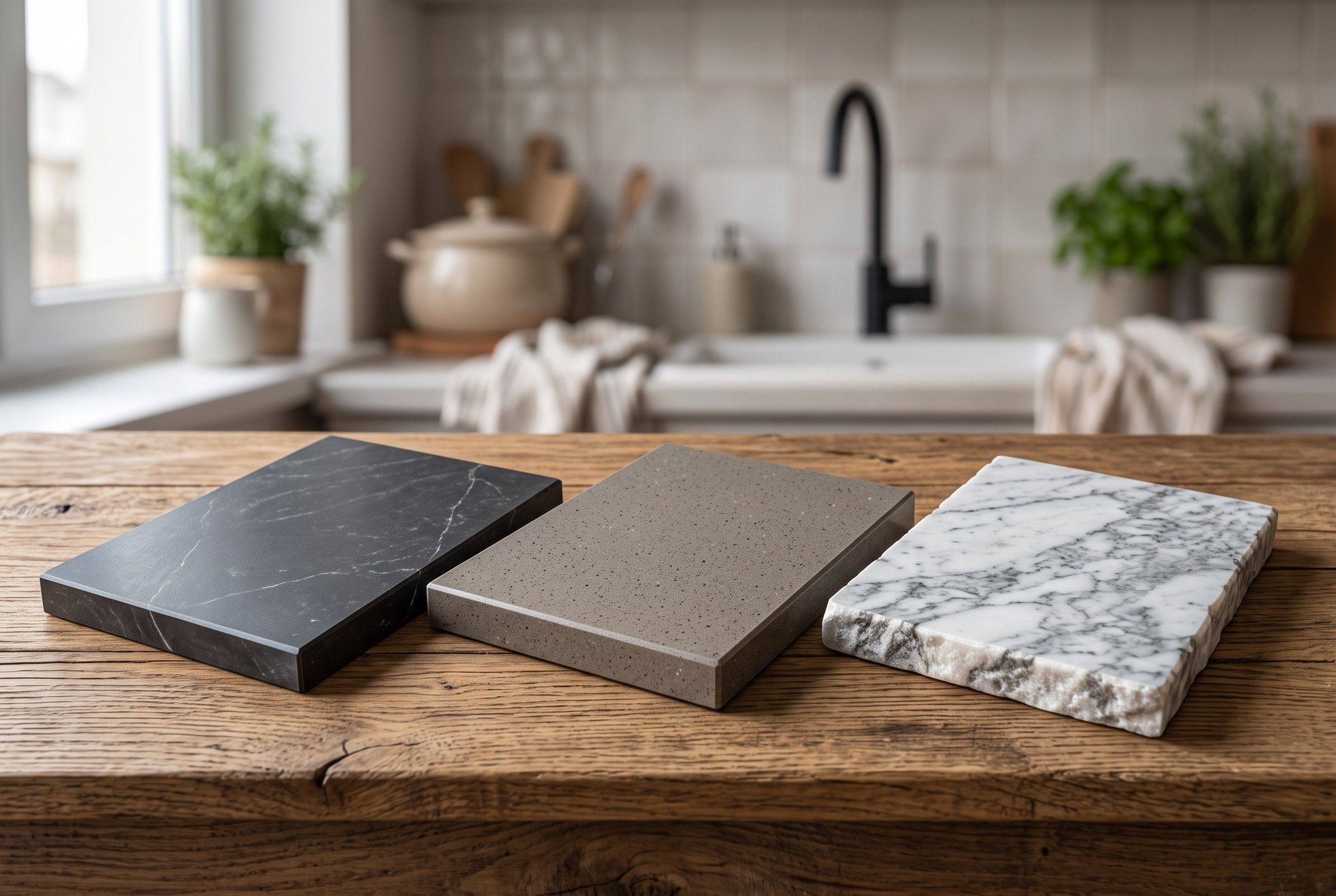
This is when you make the decisions that affect budget and appearance the most: the type of fronts, the worktop material, the carcass colour and the hardware class. Changing your mind costs least now, because nothing has gone into production. We compare lacquered, veneered, laminate and Fenix fronts, and sintered stone, engineered quartz and natural stone worktops, in a separate comparison of cabinet fronts. If you’re planning a kitchen, finalise your appliance list at this stage, since appliance dimensions decide the cabinet widths and the worktop cut-outs.
Quote and contract
The final quote comes once you accept the design, because only then is the full specification clear: running metres, the type of fronts, the hardware class and the scope of fitting. We cover the factors that move this figure the most in the article on made-to-measure furniture prices. A good contract describes the order precisely enough that, six months later, you can check what was agreed. In practice, it should record:
- the board and front model and colour, not just the general name of the material;
- the hardware brand and range, including the load rating of the drawer runners;
- how the edges and banding are finished, especially near the dishwasher and sink;
- who handles appliances and connections: what the joiner fits and what an electrician or plumber fits;
- a payment schedule tied to stages, not only to calendar dates;
- the completion date and the terms that apply if it slips.
Deposits in the trade usually range from 20% to 50% of the order value. On larger projects, such as an extensive living-room built-in, payment is sometimes split by stage: design, production and fitting. Ask what happens if you cancel after signing, too. Made-to-measure furniture is made to your specification, so the 14-day right of withdrawal (prawo odstąpienia) for distance purchases doesn’t apply. The seller must tell you this clearly before you sign. If they don’t, the withdrawal period can extend to as long as 12 months.
If you already have a floor plan and a rough list of what you want, you don’t need to wait for a phone call. Send the basics through the quote form, and the first conversation can start with specifics.
Production
Production time depends on the material and how busy the workshop is. Guides and workshop websites most often quote four to eight weeks, and up to twelve for unusual materials, a large project or a seasonal peak. The work runs in sequence: cutting boards into panels to the design, edge banding and drilling for hardware. Lacquered fronts also need sanding, priming and lacquering in a separate room, where the lacquer dries and cures before packing.
You won’t usually see production, but you can ask what stage your order has reached, especially as the fitting date gets closer. Use the time to sort out your side of things. Plastering, tiling and flooring should be finished before fitting. Check access and the lift if you live on an upper floor, and make sure the appliances you’ve bought match the dimensions in the design.
Fitting, handover and warranty
Fitting a simple unit takes a few hours; a large kitchen or a walk-in wardrobe in its own room can keep a team busy for several days. The order of work is usually the same: base units first, levelled, then the worktop, then wall units, and finally fronts, handles and lighting. A separate team often fits a stone worktop, because it needs different equipment and more careful transport. When the fitters finish, walk round with them and check the drawers, fronts and lighting. Only then sign the handover report, ideally with a list of snags if anything needs fixing.
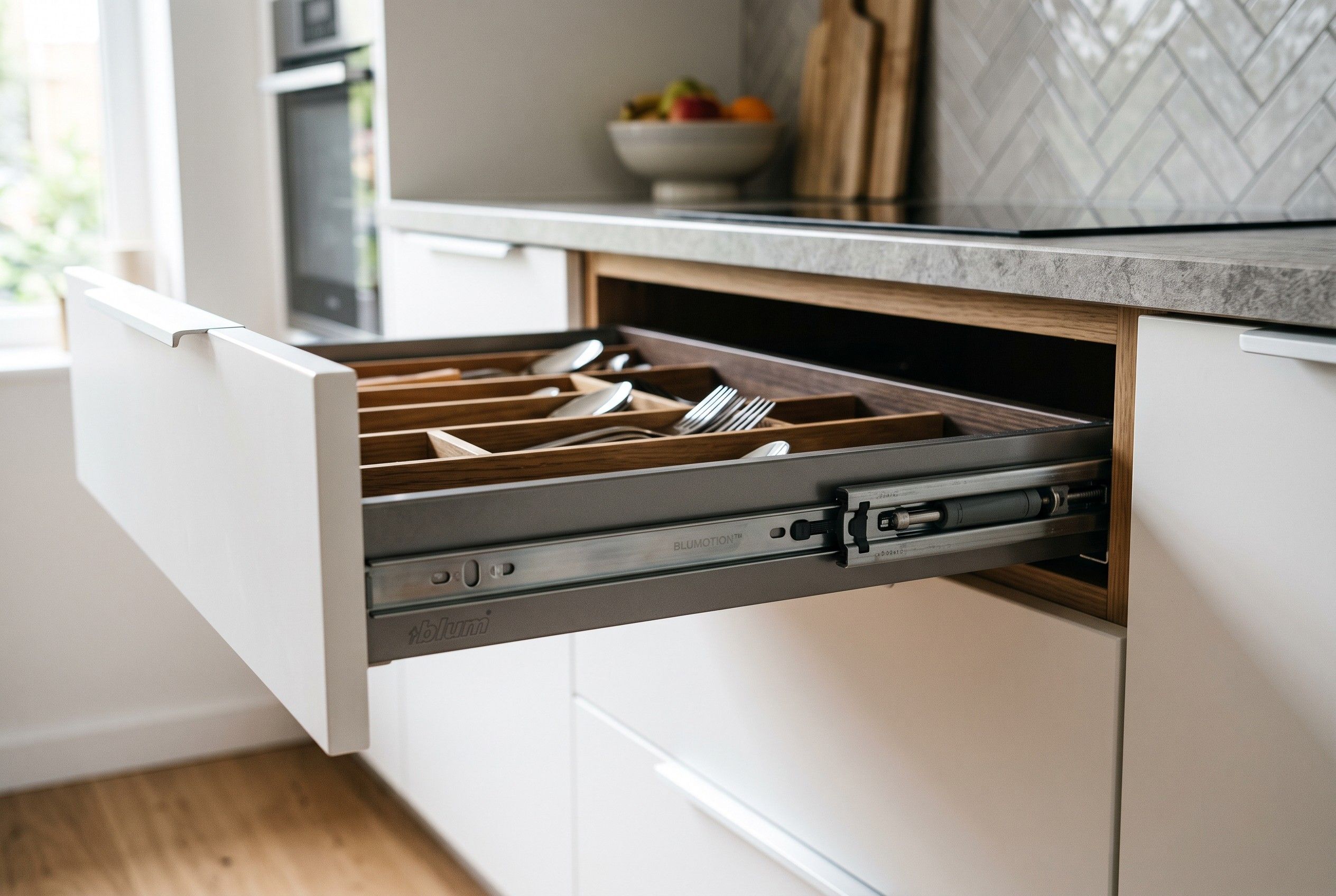
Buyers in Poland have statutory protection for at least two years from handover, whatever extra the workshop offers. It used to be called the statutory warranty for defects (rękojmia) and is now formally non-conformity of goods with the contract. In the first year, the seller has to prove that a defect wasn’t present at handover, not the other way round. Some firms extend the cover on mechanisms by pointing to the hardware manufacturers’ warranties. Blum, for instance, gives hinges, runners and lift systems a lifetime quality guarantee for domestic use. We look at when the hardware brand matters in the article on furniture hardware. After fitting, ask for the warranty card and a care guide for your materials.
The whole process in one table:
| Stage | What it covers | Indicative time |
|---|---|---|
| First contact | Conversation about scope, budget and timing, and whether the workshop covers your area | 1–3 working days for a reply |
| Site survey | Visit to the room, measuring walls, angles, services | Usually 1–2 weeks from booking |
| Design and visualisation | Functional layout, options, visualisation, material decisions | 1–3 weeks, depending on the number of revisions |
| Quote and contract | Specification, final price, payment schedule, deposit | A few days to signing |
| Production | Cutting boards, edge banding, lacquering, preparing hardware | 4–8 weeks, up to 12 when the workshop is busy |
| Fitting and handover | On-site fitting, checking everything works, handover report | From a few hours to several days |
The same sequence applies whether you’re ordering a kitchen, a fitted wardrobe, a walk-in wardrobe or a home office. What changes is mainly the production time and the scope of fitting.